sábado, 17 de julio de 2021

ETHICAL QUESTIONS ABOUT COVID: THE DENIERS


As a Doctor, May I Refuse to See Unvaccinated Patients?

The magazine’s Ethicist columnist on mitigating risk from Covid-19 without punitive measures —and more.

Credit...Illustration by Tomi Um

I’m a family physician in private practice. More than 225 of my patients have been infected with the coronavirus. Some were hospitalized, some were placed on ventilators and more than a few have “long Covid” symptoms. When the vaccines became available, not only did I and my staff get vaccinated, but we also assisted our patients in procuring vaccination appointments. By spring, more than 80 percent of my patients were fully vaccinated, and we can now offer unvaccinated patients the convenience of vaccination in our office. A significant segment of our practice consists not of “vaccine hesitant” but of “vaccine refusing.” We attempt to create a nonjudgmental, nonshaming atmosphere for our patients to express their reasons for refusing the vaccine. Many have bizarre, almost delusional reasons for not getting vaccinated. Others have fallen prey to misinformation online. Because our patients often take mass transit to their appointments and because our office is in a high-rise and because I offer telehealth appointments, is it ethical and in the interest of public health to restrict vaccine-refusing patients to telehealth appointments? Name Withheld, New York

We all depend on other people — our trusted networks — for much of what we know or believe to be true. So we’re all vulnerable to misinformation when people whose epistemic authority we trust mislead us. Sometimes, no doubt, a touch of arrogance eases the departure from reality, too. Lay people who dissent from the scientific consensus may strike you as woefully credulous but often pride themselves on being independent-minded. Still, these are social, not individual, delusions.

And social delusions pose shared difficulties. Commendably, it sounds as if you’ve done your best to set everyone straight. Once certain patients are committed to nonvaccination, however, you are not free to make decisions that could reasonably be viewed as punitive. You can certainly insist on their keeping away from the premises if they pose a genuine risk to others in your practice. But that shouldn’t be the case, given that your patients are mostly vaccinated (and your staff entirely so) and that you’ll presumably require unvaccinated patients to wear masks and practice social distancing.

When unvaccinated patients ask for an appointment, you can routinely offer teleconsultations (in circumstances where this is a medically sound option), explaining that, in your view, every trip puts them at further risk of contracting or transmitting infection. That’s a good way of keeping before them the fact that a relevant expert in their lives has a different view from theirs. Still, these exasperating people should be free to ignore your very sound advice and remain in your care.

ADVERTISEMENT

Continue reading the main story

My adult son told me he was “waiting his turn” to be vaccinated but now admits he has no plans to do so. He is in his 30s and steeped in conservative media messages, like Fox News and Dave Ramsey. He says as long as we are vaccinated, it doesn’t matter if he isn’t. We feel that he’s taking a belligerent and selfish stance. We believe that the vaccine is important not only for each recipient’s own health but also to protect people who can’t take the shots (and the vaccine is not 100 percent effective). Logically, we know he’s unlikely to infect us. We’re scheduled to meet for a small celebration. Our first reaction was to continue our “no mask, no meet” policy, but are we overreacting? We could still meet, but we would wear masks. This will cause a deep rift if we don’t handle it well. Name Withheld


To go by current C.D.C. guidance for small indoor gatherings, your son is the one who should be masked. But if he’s the only unvaccinated participant, the risks to you — and to him — are very low. (New variants could change the calculation; we’re getting additional data all the time.) Yes, he’s being a knucklehead in this respect, and I trust you’ve made your views about it very clear to him. But a family celebration isn’t a favor to which you can attach conditions. The prospect of getting together, even with this blinkered soul, is something you plainly value. You probably won’t go wrong by suspending the policy and letting him raise a glass with you.

My 11-year-old son is very nervous about being out in the world. My wife and I and our 13-year-old are all vaccinated. I would like our 11-year-old to get vaccinated and am willing to lie about his age to do so. (I am confident that if the vaccine is fine for someone a few months older than he, it’s fine for him too.) Is it ethical to sign him up for a vaccine and to ask him to lie if asked about his age? Peter, Iowa City


The rules and recommendations of medical authorities rightly shift in response to shifting evidence; they shouldn’t be bent in response to our individual fears.

Most of the time, the social logic of vaccination has a pleasing symmetry: It’s good for you, and it’s good for the rest of us. With children, who can transmit the virus but very seldom get seriously ill from it — and again, new variants could change the picture — the benefits flow mostly to others. As this newspaper has reported, children your son’s age are more likely to perish from flu, drowning or motor-vehicle accidents. Look for ways to reassure your boy that don’t involve a needle. The rules and recommendations of medical authorities rightly shift in response to shifting evidence; they shouldn’t be bent in response to our individual fears.

ADVERTISEMENT

Continue reading the main story

I retired as a professor of education from a small college. One of my former colleagues in the department had only a master’s, for which the department was criticized by an accreditation agency. She applied to a Ph.D. program a few years ago but was not accepted and left the college. She is now working as an administrator in a private school for children with disabilities. A short bio on the school website states that she received her Ph.D. from a Midwestern university in 2012. I know that to be false, as she was rejected from a local program after that date.

My first impulse was to contact the private school. On reflection, however, I realized that this would result in her losing her job. Do I have a professional obligation to let the school know that her bio is not accurate? Robert Berman, Long Island, N.Y.

Your former colleague wronged her employers when she deceived them; she may have wronged others who competed with her for the job. But yes, taking an action that would have grave consequences requires careful consideration. Being fired is a serious penalty for this lie, especially if, as I suspect, the qualification she claimed wasn’t really necessary for the job. Had the school truly cared about the credential, it could have done its due diligence: Degrees are considered “directory information,” readily disclosed to potential employers.

We regularly put too much stock in formal qualifications: If she was doing a good job in your department, your accreditors were taking a shortcut to a proper evaluation. Having a doctoral degree cannot matter more than experience and commitment in teaching. (And I’m putting aside the fact that plenty of people with doctoral degrees are lousy teachers.) In the British system of higher education in which I was formed, the doctorate arrived as a belated German import, and many eminences on the faculty wouldn’t have had one. What’s more, your colleague is working now as an administrator in a pre-college context, and teachers and administrators without doctoral degrees have been responsible for great K-12 schooling, including for students with disabilities. I would feel different if I thought her prevarication was at the expense of those children, but I see no reason this would have to be so.

None of this is at all exculpatory. That our preoccupation with paper credentials is regrettable doesn’t excuse a misrepresentation of those credentials. So let me be clear: You’re certainly entitled to expose her and wouldn’t be wronging her if you did. The loss of her job, perhaps of her career, would have been her own fault. But you don’t have a professional obligation to expose her, either. Keeping other people honest about their credentials whenever we happen to find them misstated isn’t a duty we have in relation to everyone we’ve ever worked with.


Kwame Anthony Appiah teaches philosophy at N.Y.U. His books include “Cosmopolitanism,” “The Honor Code” and “The Lies That Bind: Rethinking Identity.” To submit a query: Send an email to ethicist@nytimes.com; or send mail to The Ethicist, The New York Times Magazine, 620 Eighth Avenue, New York, N.Y. 10018. (Include a daytime phone number.)

A version of this article appears in print on July 18, 2021, Page 14 of the Sunday Magazine with the headline: As a Doctor, May I Refuse to See Unvaccinated Patients?. Order Reprints | Today’s Paper | Subscribe

You’re almost out of free articles.

Get unlimited article access

for $0.25 a week.

Limited time offer. Cancel anytime.

Suggested newsletters for you

The Morning newsletter

DAILY

The Morning

Make sense of the day’s news and ideas. David Leonhardt and Times journalists guide you through what’s happening — and why it matters.

See the latest
Breaking News newsletter

AS NEEDED

Breaking News

Alerts when important news breaks around the world.

See the latest
Opinion Today newsletter

WEEKDAYS

Opinion Today

Get expert analysis of the news and a guide to the big ideas shaping the world.

See the latest
Subscribe for 
$0.25 a week. 
Limited time offer.
Subscribe for 
$0.25 a week. 
Limited time offer.

miércoles, 14 de julio de 2021


SHALL WE HEAR SOME ODD BITS ON ASSSIMILIATIONS ? 

FUN FOR THE PHONETIC FREAK  
  😊https://youtu.be/i_ohrkQmzdQ

sábado, 29 de mayo de 2021

MAKING CATTLE MORE SUSTAINABLE

 ENVIRONMENTALISM


WHAT IS WRONG WITH CATTLE RAISING ? 

HOW ARE COWS  AFFECTING THE ENVIRONMENT ?

 WHAT CAN BE DONE TO REDUCE THEIR PULLUTING EFFECT ?  

They release methane . 


READ 

Cows and climate change | UC Davis

Making cattle more sustainable

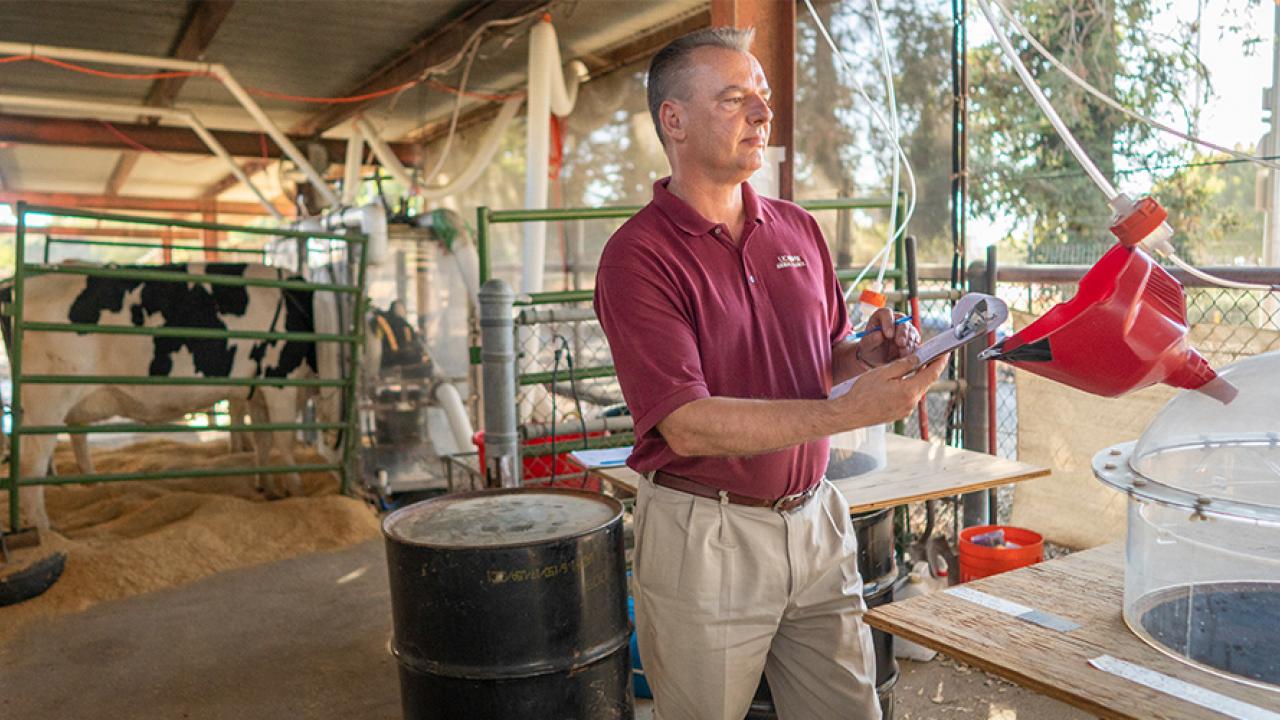
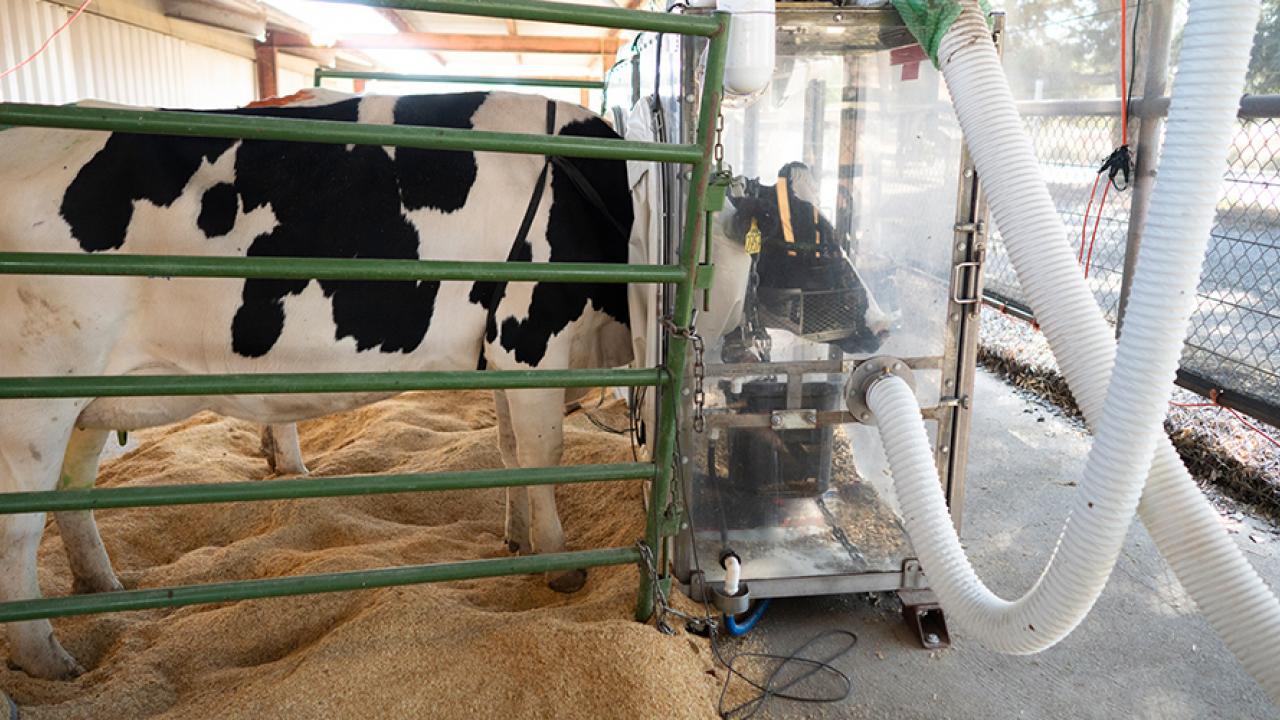
Inside the University of California, Davis, a Holstein cow has its head and neck sealed airtight inside a large, clear-plastic chamber that resembles an incubator for newborns. While giant tubes above the chamber pump air in and push air out, the cow calmly stands and eats her feed. Equipment inside a nearby trailer spits out data.

This is how Frank Mitloehner measures gases that come from cows’ stomachs and ultimately contribute to global warming. Quantifying these emissions is key to mitigating them, and Mitloehner is one of several UC Davis researchers investigating economical ways to make livestock production more environmentally sustainable around the globe.

UC Davis Professor Frank Mitloehner
Frank Mitloehner, UC Davis professor and air quality specialist, is researching ways to reduce greenhouse gas emissions from cows. In this experiment, he's added an essential oil to the cow's feed. (Karin Higgins/UC Davis)
Cow being measured for gas levels
The plastic chambers help measure the amount of gases coming from the cow's stomach more precisely. Each year, one cow can belch 220 pounds of methane, which is 28 times more potent than carbon dioxide. (Karin Higgins/UC Davis)


READ MORE: Unfold, the official UC Davis podcast, examines the bad rap cattle receive as an unfriendly producer of climate-changing greenhouse gas.

Cattle are the No. 1 agricultural source of greenhouse gases worldwide. Each year, a single cow will belch about 220 pounds of methane. Methane from cattle is shorter lived than carbon dioxide but 28 times more potent in warming the atmosphere, said Mitloehner, a professor and air quality specialist in the Department of Animal Science.

With the escalating effects of climate change, that fact has advocates urging the public to eat less beef. They contend it’s an unsustainable diet in a world with a population expected to reach nearly 10 billion by 2050.

Mitloehner has openly challenged this view, writing in a recent commentary for The Conversationthat “forgoing meat is not the environmental panacea many would have us believe.”

Cows and other ruminants account for just 4 percent of all greenhouse gases produced in the United States, he said, and beef cattle just 2 percent of direct emissions.

Better breeding, genetics and nutrition have increased the efficiency of livestock production in the U.S. In the 1970s, 140 million head of cattle were needed to meet demand. Now, just 90 million head are required. At the same time, those 90 million cattle are producing more meat.

“We’re now feeding more people with fewer cattle,” Mitloehner said.

The global problem

Shrinking livestock’s carbon hoofprint worldwide is a big challenge. Livestock are responsible for 14.5 percent of global greenhouse gases.

India, for example, has the world’s largest cattle population, but the lowest beef consumption of any country. As a result, cows live longer and emit more methane over their lifetime. In addition, cows in tropical regions produce less milk and meat, so it takes them longer to get to market.


martes, 25 de mayo de 2021

CONSERVE ENERGY 25 WAYS TO REDUCE

 CONSERVE ENERGY 


We often talk about replacing fossile fuels . That this will clean up our planet . But we should also discuss another form of energy : 


CONSERVE ENERGY 


Read  what we can do 

 https://www.conserve-energy-future.com/15-easy-ways-to-reduce-landfill-waste.php

EXTINCTION OF SPECIES BY PROF ALEJANDRO ALTIMIR

 SOME SPEICES HAVE BEEN DISAPPEARING . OTHERS WILL HABEEN WIPED OUT FOR GOOD BY GLOBAL CLIMATE 


Mass Lizard Extinctions Looming; Global Warming Blamed

One in five lizard species predicted to vanish by 2080.

Ker Than

for National Geographic News

Published May 13, 2010

Lounging in the shade may sound soothing, but it could be the death of many lizards if global warmingcontinues at current rates.

As temperatures inch upward, the reptiles rest more and hunt less. As a result, 20 percent of lizard species could go extinct by 2080, a new study says.

No matter what we do to fight global warming, at least 6 percent of lizard species will go extinct by then, due to the greenhouse gases already in the atmosphere, the study says.

"We've committed ourselves to 6 percent," said lead study author Barry Sinervo, a herpetologist at the University of California, Santa Cruz. "That's our fault, and there's nothing we can do."

And those percentages are conservative, Sinervo said. For example, the study doesn't account for threats such as competition between lizard species or the effects of global warming-caused water shortages.

David Wake, who wasn't involved in the new study, agreed that the findings are far from exaggerated. "It's frightening," the University of California, Berkeley, zoologist said. "But it's reasonable."

Global Warming to Starve Lizards to Death?

The study team calculated extinction risks for more than a thousand lizard species around the globe for their study, to be published in the journal Sciencetomorrow.

The research was prompted by the discovery that 50 percent or more of the local populations of certain species had gone extinct in parts of Mexico and Europe.

The team suspected global warming was to blame, because the lizard-population crashes had generally occurred in areas with the warmest springs—when lizards reproduce.

To test their global warming hypothesis, the researchers created pseudo-lizards out of temperature gauges and painted pipe. The researchers placed the devices at four sites in Mexico's Yucatán Peninsula: two sites where blue spiny lizards are thriving and two where the species has gone locally extinct.

Unlike mammals, lizards and other reptiles are cold-blooded, meaning they can't regulate their body temperatures and so must seek shade when it gets too hot.

Where the blue spiny lizards are still living, the spring temperatures were such that the lizards should have only had to seek shelter from the sun for about four hours a day, the gauges suggested.

But where the lizard had already gone locally extinct, the spring temperature was so high it would have dictated that the lizards spend most of the day hiding from the sun rather than hunting.

That much downtime means the lizards will "pretty much be starving to death" and not laying eggs, said Sinervo, whose study was partly funded by the National Geographic Society's Committee for Research and Exploration. (The National Geographic Society owns National Geographic News.)

Lizard Extinctions Predicted

Next the team set out to determine whether their findings held up at a global scale.

The scientists created a computer model incorporating temperature data back to 1975, global warming prediction data from the Intergovernmental Panel on Climate Change, and the maximum temperatures different lizard species can withstand.

The model calculated the number of hours each day that a lizard species should be incapacitated due to heat as well as the hottest temperatures for different parts of the Earth in the past, present, and future.

The model accurately predicted specific locations where lizard species are known to have gone locally extinct in North and South America, Europe, Africa, and Australia.

Certain Lizards Especially at Risk

Global warming will hit lizards in the Amazon and Madagascar especially hard, the computer model predicted.

"The number of local extinctions we're seeing [in the Amazon], based on the model, is through the roof," Sinervo said. "It's 60, 70, 80 percent even in some places."

And because Amazon lizards are relatively poorly documented, "we don't even know all the different species that we're going to lose," he added.

Another especially vulnerable category is lizards that give birth to live young, including the blue spiny lizard, which Sinervo studied in Mexico.

Live-birth lizards "had to evolve slightly lower body temperatures, because if it's too high, the babies might die or develop developmental abnormalities," Sinervo explained.

Bigger Than Lizards

The new study underscores that global warming isn't just a lizard problem, saidWarren Porter, a zoologist at the University of Wisconsin-Madison.

"Many people might consider changes to lizard populations of small importance," said Porter, who wasn't involved in the study.

But, he pointed out, "another major group of cold-blooded animals, the pollinating insects, are also subject to the same constraints that lizards are."

The loss of pollinators, he added, would be devastating to the human food supply.

Porter also noted that the team looked mainly at small lizards. The extinction risks for larger lizards, such as the Komodo dragon, could be much higher, he said.

"Larger species of animals are even more vulnerable to heat stress," Porter said, "because they have fewer places to find shade and water on a landscape that is drying out."


domingo, 23 de mayo de 2021

 THE PROS OF ORGANIC FARMING 

ENGLISH STUDIES CENTER 

What  are the effects of uncontrolled farming on the soil and on the environment in general ? 

what benefits does organic farming yield? 

Organic farming yields such vital benefits as preservation of soil's organic composition. ... Maintain and improve fertility, soil structure and biodiversity, and reduce erosion. Reduce the risks of human, animal, and environmental exposure to toxic materials.

Organic farming has a smaller carbon footprint, conserves and builds soil health, replenishes natural ecosystems for cleaner water and air, all without toxic pesticide residues.


As organic vwegetables are harder to obtain because the produce is smaller,  they are more expensive . This leads to fewer `people consuming them 

Free range hens are not reared in captivity but in the open air, therefore they are healthier. However,  their price is still high for the average consumer 


CAUSALITY RELATIONSHIP 


A BRINGS ABOUT  B

   LEADS TO 

   CAUSES  B TO HAPPEN 


B SPRINGS FROM A 

   IS CAUSED BY A 

  STEMS FROM  

lunes, 26 de abril de 2021

i want to know about American History 1

CENTRO DE ESTUDIOS INGLESES 


ESCUELA Y CARRERAS DE INTERPRETACION  


MATERIA ASPECTOS DE LA SOCIEDAD CONTEMPORANEA


  InTerpreters  This is a good source of gnral info that spans from  general vocabs of everyday lives to the collection of terms of political societies 

life in modern america 

( SPECIALBIBLOGRAPHY TO PRACTICE  ON SIGHT TRANSLATION , DO PRAPHRASING AND TEXT RESTRUCTURING )

https://www.cliffsnotes.com/study-guides/history/us-history-ii/american-society-and-culture-18651900/everyday-life-in-america