SHALL WE HEAR SOME ODD BITS ON ASSSIMILIATIONS ?
FUN FOR THE PHONETIC FREAK
😊https://youtu.be/i_ohrkQmzdQ
ENVIRONMENTALISM
WHAT IS WRONG WITH CATTLE RAISING ?
HOW ARE COWS AFFECTING THE ENVIRONMENT ?
WHAT CAN BE DONE TO REDUCE THEIR PULLUTING EFFECT ?
They release methane .
READ
Cows and climate change | UC Davis
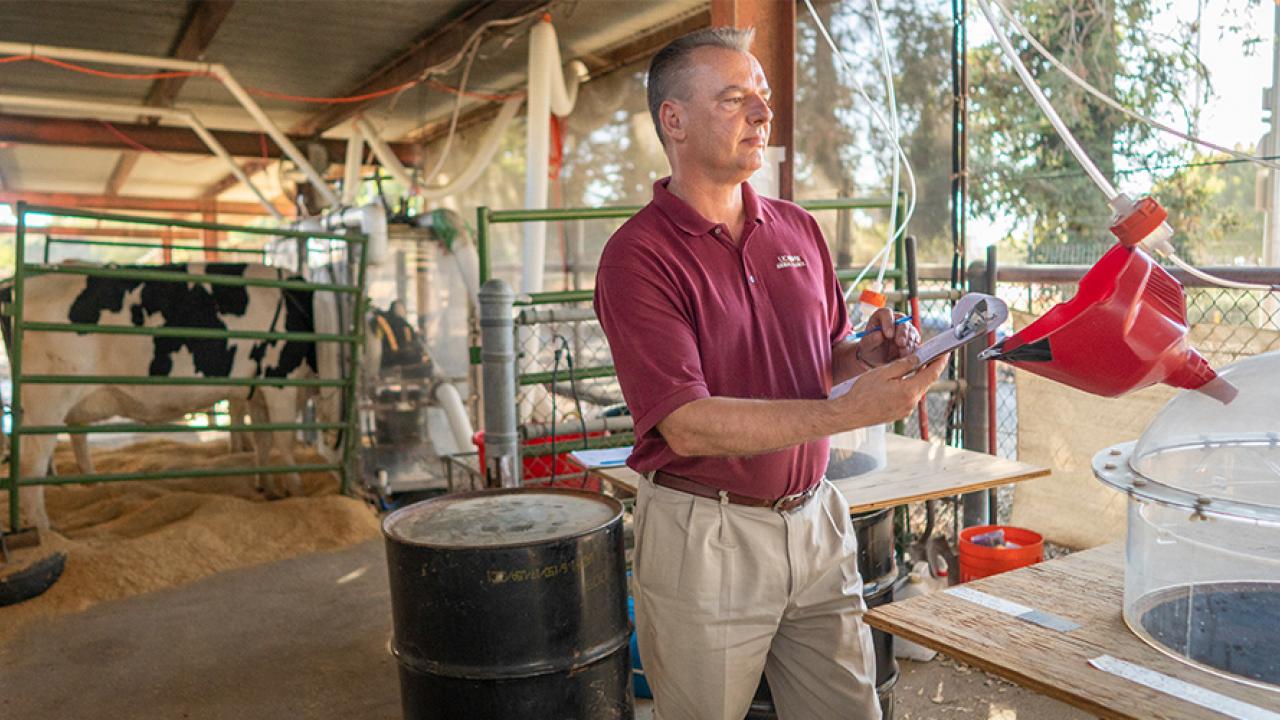
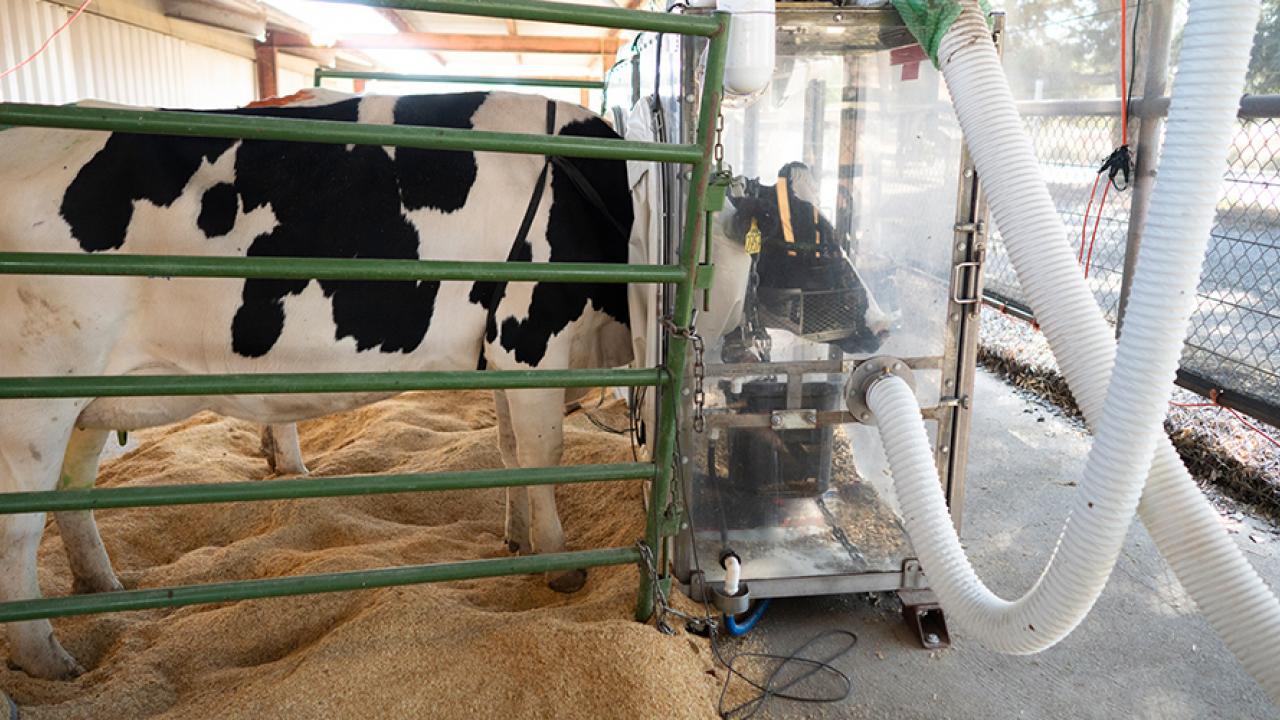
Inside the University of California, Davis, a Holstein cow has its head and neck sealed airtight inside a large, clear-plastic chamber that resembles an incubator for newborns. While giant tubes above the chamber pump air in and push air out, the cow calmly stands and eats her feed. Equipment inside a nearby trailer spits out data.
This is how Frank Mitloehner measures gases that come from cows’ stomachs and ultimately contribute to global warming. Quantifying these emissions is key to mitigating them, and Mitloehner is one of several UC Davis researchers investigating economical ways to make livestock production more environmentally sustainable around the globe.
READ MORE: Unfold, the official UC Davis podcast, examines the bad rap cattle receive as an unfriendly producer of climate-changing greenhouse gas.
Cattle are the No. 1 agricultural source of greenhouse gases worldwide. Each year, a single cow will belch about 220 pounds of methane. Methane from cattle is shorter lived than carbon dioxide but 28 times more potent in warming the atmosphere, said Mitloehner, a professor and air quality specialist in the Department of Animal Science.
With the escalating effects of climate change, that fact has advocates urging the public to eat less beef. They contend it’s an unsustainable diet in a world with a population expected to reach nearly 10 billion by 2050.
Mitloehner has openly challenged this view, writing in a recent commentary for The Conversationthat “forgoing meat is not the environmental panacea many would have us believe.”
Cows and other ruminants account for just 4 percent of all greenhouse gases produced in the United States, he said, and beef cattle just 2 percent of direct emissions.
Better breeding, genetics and nutrition have increased the efficiency of livestock production in the U.S. In the 1970s, 140 million head of cattle were needed to meet demand. Now, just 90 million head are required. At the same time, those 90 million cattle are producing more meat.
“We’re now feeding more people with fewer cattle,” Mitloehner said.
Shrinking livestock’s carbon hoofprint worldwide is a big challenge. Livestock are responsible for 14.5 percent of global greenhouse gases.
India, for example, has the world’s largest cattle population, but the lowest beef consumption of any country. As a result, cows live longer and emit more methane over their lifetime. In addition, cows in tropical regions produce less milk and meat, so it takes them longer to get to market.
CONSERVE ENERGY
We often talk about replacing fossile fuels . That this will clean up our planet . But we should also discuss another form of energy :
CONSERVE ENERGY
Read what we can do
https://www.conserve-energy-future.com/15-easy-ways-to-reduce-landfill-waste.php
SOME SPEICES HAVE BEEN DISAPPEARING . OTHERS WILL HABEEN WIPED OUT FOR GOOD BY GLOBAL CLIMATE
Published May 13,
2010
Lounging in the shade may sound soothing, but it could
be the death of many lizards if global warmingcontinues at current rates.
As temperatures inch upward, the
reptiles rest more and hunt less. As a result, 20 percent of lizard species
could go extinct by
No matter what we do to fight
global warming, at least 6 percent of lizard species will go extinct by then,
due to the greenhouse gases already in the atmosphere, the study says.
"We've committed ourselves
to 6 percent," said lead study author Barry Sinervo, a herpetologist at
the
And those percentages are
conservative, Sinervo said. For example, the study doesn't account for threats
such as competition between lizard species or the effects of global
warming-caused water shortages.
David Wake, who wasn't involved
in the new study, agreed that the findings are far from exaggerated. "It's
frightening," the
Global Warming to Starve Lizards
to Death?
The study team calculated
extinction risks for more than a thousand lizard species around the globe for
their study, to be published in the journal Sciencetomorrow.
The research was prompted by the
discovery that 50 percent or more of the local populations of certain species
had gone extinct in parts of
The team suspected global warming
was to blame, because the lizard-population crashes had generally occurred in
areas with the warmest springs—when lizards reproduce.
To test their global warming
hypothesis, the researchers created pseudo-lizards out of temperature gauges
and painted pipe. The researchers placed the devices at four sites in
Unlike mammals, lizards and other reptiles are cold-blooded, meaning they can't regulate their body temperatures
and so must seek shade when it gets too hot.
Where the blue spiny lizards are
still living, the spring temperatures were such that the lizards should have
only had to seek shelter from the sun for about four hours a day, the gauges
suggested.
But where the lizard had already
gone locally extinct, the spring temperature was so high it would have dictated
that the lizards spend most of the day hiding from the sun rather than hunting.
That much downtime means the
lizards will "pretty much be starving to death" and not laying eggs,
said Sinervo, whose study was partly funded by the National Geographic
Society's Committee for Research
and Exploration. (The National Geographic Society owns National
Geographic News.)
Lizard Extinctions Predicted
Next the team set out to
determine whether their findings held up at a global scale.
The scientists created a computer
model incorporating temperature data back to 1975, global warming prediction
data from the Intergovernmental Panel on Climate Change, and the maximum
temperatures different lizard species can withstand.
The model calculated the number
of hours each day that a lizard species should be incapacitated due to heat as
well as the hottest temperatures for different parts of the Earth in the past,
present, and future.
The model accurately predicted
specific locations where lizard species are known to have gone locally extinct
in North and South America, Europe, Africa, and
Certain Lizards Especially at
Risk
Global warming will hit lizards
in the Amazon and
"The number of local
extinctions we're seeing [in the Amazon], based on the model, is through the
roof," Sinervo said. "It's
60, 70, 80 percent even in some places."
And because Amazon lizards are
relatively poorly documented, "we don't even know all the different
species that we're going to lose," he added.
Another especially vulnerable
category is lizards that give birth to live young, including the blue spiny
lizard, which Sinervo studied in
Live-birth lizards "had to
evolve slightly lower body temperatures, because if it's too high, the babies
might die or develop developmental abnormalities," Sinervo explained.
Bigger Than Lizards
The new study underscores that
global warming isn't just a lizard problem, saidWarren Porter, a zoologist at the
University of Wisconsin-Madison.
"Many people might consider
changes to lizard populations of small importance," said Porter, who
wasn't involved in the study.
But, he pointed out,
"another major group of cold-blooded animals, the pollinating insects, are
also subject to the same constraints that lizards are."
The loss of pollinators, he
added, would be devastating to the human food supply.
Porter also noted that the team
looked mainly at small lizards. The extinction risks for larger lizards, such
as the Komodo dragon, could be much
higher, he said.
"Larger species of animals
are even more vulnerable to heat stress," Porter said, "because they
have fewer places to find shade and water on a landscape that is drying
out."
THE PROS OF ORGANIC FARMING
ENGLISH STUDIES CENTER
What are the effects of uncontrolled farming on the soil and on the environment in general ?
what benefits does organic farming yield?
Organic farming yields such vital benefits as preservation of soil's organic composition. ... Maintain and improve fertility, soil structure and biodiversity, and reduce erosion. Reduce the risks of human, animal, and environmental exposure to toxic materials.
Organic farming has a smaller carbon footprint, conserves and builds soil health, replenishes natural ecosystems for cleaner water and air, all without toxic pesticide residues.
As organic vwegetables are harder to obtain because the produce is smaller, they are more expensive . This leads to fewer `people consuming them
Free range hens are not reared in captivity but in the open air, therefore they are healthier. However, their price is still high for the average consumer
CAUSALITY RELATIONSHIP
A BRINGS ABOUT B
LEADS TO
CAUSES B TO HAPPEN
B SPRINGS FROM A
IS CAUSED BY A
STEMS FROM
CENTRO DE ESTUDIOS INGLESES
ESCUELA Y CARRERAS DE INTERPRETACION
MATERIA ASPECTOS DE LA SOCIEDAD CONTEMPORANEA
InTerpreters This is a good source of gnral info that spans from general vocabs of everyday lives to the collection of terms of political societies
life in modern america
( SPECIALBIBLOGRAPHY TO PRACTICE ON SIGHT TRANSLATION , DO PRAPHRASING AND TEXT RESTRUCTURING )
https://www.cliffsnotes.com/study-guides/history/us-history-ii/american-society-and-culture-18651900/everyday-life-in-america
AMERICAN POLITICS HOW DOES THE AMERICAN SYSTEM WORK WHAT IS THEIR SYSTEM OF GOVRNMENT
In 2020, they will face a choice between incumbent President Donald Trump of the Republican party and his Democratic challenger, the former vice-president Joe Biden.
But in addition to that vote, many states are also holding elections for positions in the United States Senate, House of Representatives and state-wide political roles.
BBC Bitesize takes a look at how the US political system and government works.
In the United Kingdom, Scotland, Wales and Northern Ireland and some local authorities in England (such as Greater Manchester) have been given devolved powers - meaning they have responsibility for some key decision making in their area, while central government in Westminster takes control of other matters.
It’s similar across the United States – although in the US, every state has its own powers and control over spending. State government is responsible for things like holding elections and providing for public safety, health and welfare.
The federal government, or national government, looks after things like immigration, foreign affairs and minting money. Other powers, such as taxation, lawmaking and law enforcement are shared between state and federal governments.
Federal power is split into three different branches of government – the executive (the president and their cabinet), the judiciary (the Supreme Court) and the chambers of the United States Congress.
In the UK, we have the House of Commons and House of Lords. Similarly, there are two chambers in the US Congress.
The House of Representatives is the lower chamber of Congress and is made up of elected representatives from across the country.
There are 435 voting members of the House of Representatives (six non-voting members also attend sessions representing US territories and Washington DC). Each state is allocated a different number of representatives based on their population – California is the largest with 53 while seven states have just a single representative.
Representatives serve a two-year term and the entire chamber goes up for re-election every November in even-numbered years.
As part of the legislative branch of the United States Congress, the House of Representatives has control over which legislation comes to a vote.
The upper chamber is known as the Senate and was originally intended to be a regulatory group providing checks and balances for the work of the Representatives – but it has been the dominant body since the mid 19th Century.
There are fewer members of the Senate – just 100 – with each state having two senators, regardless of its size.
Senators are directly elected and serve six-year terms – there are no term limits in place and many serve for several decades. The longest serving US senator was Democrat Robert Byrd who represented West Virginia for 51 years before dying in office in 2010.
The US vice-president takes a leading role in the Senate, acting as the chamber’s president. The Senate has the power to approve or block any new laws, to debate and confirm any presidential appointments to high-ranking office (as appropriate) and also to conduct investigatory trials against the president in a process known as impeachment.
The Supreme Court is the highest court in the judiciary in the United States and is responsible for making sure any laws passed by the legislature are compatible with the US constitution – the overarching set of rules and laws, first written by what are known as the founding fathers, that are the source of government powers.
There are nine judges appointed to the court – each position is nominated when vacant by the president and approved by the Senate. Seats in the court are given on a life basis and vacancies are typically only created when a judge retires or passes away in post, as happened in September 2020 following the death of Ruth Bader Ginsburg who had been in office for 27 years.
While the executive, legislature and judiciary make up the national, federal government, these systems are replicated within the states themselves.
States have governors who take on the executive role as per the president nationally. With the exception of Nebraska, the remaining 49 states all have two chambers – an upper house, or Senate made up of state senators and a lower house (known as the House of Representatives, Assembly or House of Delegates).
In Nebraska, a 1936 referendum saw residents vote to get rid of the two chamber system in favour of one house – the Nebraska Legislature, made up of state senators.
States also have their own Supreme Courts which act as the state’s highest court of appeal and interpret state laws.
A number of states actually hold elections for their Supreme Court vacancies, with 82 seats across 35 states to be decided in the November 2020 elections.
It means some voters will not only have to decide on who they want to be president in 2020, but also make decisions on their state’s House of Representatives members, senators, state governors, legislatives, judges and other officials as well as a series of state-wide referendums - a busy night awaits for those counting ballots this November!